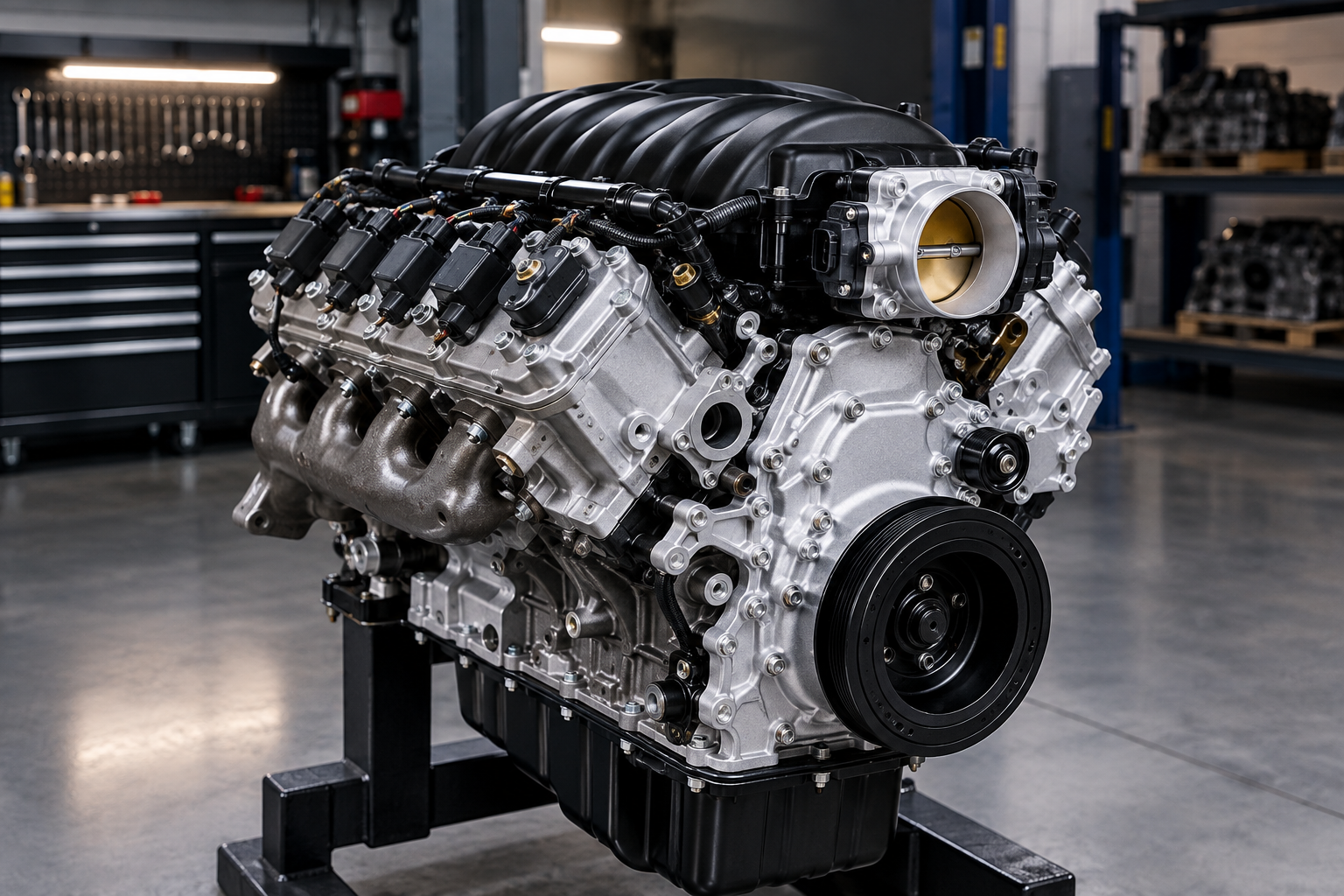
Choosing the right replacement engine is an important decision.
An engine may appear compatible because it has the same displacement or cylinder
configuration, but that does not always mean it will work correctly in your vehicle.
Differences in engine codes, model years, drivetrain configurations, fuel systems,
emissions equipment, and included components can all affect compatibility.
Whether you are replacing a failed engine in a Chevrolet, GMC, Cadillac, or another
vehicle, the safest approach is to identify your original engine as accurately as
possible before ordering a replacement. This guide explains what to check, how to
compare engine specifications, and what questions to ask before purchasing.
1. Start With Your Vehicle’s Exact Information
The first step when choosing a replacement engine is to collect the complete
information about your vehicle. Do not rely only on the vehicle’s model name or
engine size.
Before searching for an engine, have the following information available:
- Vehicle make
- Vehicle model
- Model year
- Engine displacement
- Engine code
- VIN information
- 2WD, 4WD, or AWD configuration
- Transmission configuration where applicable
- Original engine specifications
This information helps narrow your search and reduces the possibility of ordering
an engine that looks similar but is not the correct application.
2. Find Your Engine Code
One of the most important details to identify is your engine code. Engine
displacement alone does not always identify a specific engine.
For example, several GM engines can use a 5.3L V8 configuration while having
different engine codes, specifications, applications, or equipment. An engine
listed simply as a “5.3L V8” therefore may not automatically be the correct
replacement for every 5.3L vehicle.
Engine codes such as LM7 and L59 can help
distinguish between different engine applications. When shopping for a replacement
engine, compare the engine code of your original engine with the specifications and
fitment information provided for the replacement.
If you are researching GM LS engines, our
LS Engines
category is a useful starting point for exploring compatible engine options.
3. Match the Replacement Engine to Your Vehicle
Once you know your vehicle and engine information, the next step is to verify
fitment. A proper engine match should consider more than displacement.
Compare the following details:
- Engine family: Confirm that the replacement belongs to the correct engine family.
- Engine code: Compare the original and replacement engine codes where required.
- Model year: Make sure the engine is listed for your vehicle’s specific year range.
- Displacement: Verify the engine size, such as 5.3L.
- Drivetrain: Check whether the vehicle is 2WD, 4WD, or AWD.
- Fuel system: Confirm that the replacement is appropriate for your vehicle’s fuel configuration.
- Configuration: Check cylinder configuration, heads, block, and other relevant specifications.
- Included components: Determine exactly what comes with the engine.
Always use the manufacturer’s or supplier’s fitment information as the final
reference before placing an order.
4. Used vs. Remanufactured Replacement Engines
Another important decision is choosing between a used engine and a
remanufactured replacement engine.
A used engine is generally removed from another vehicle and sold in its existing
condition, subject to whatever inspection or testing the seller performs. Its
previous operating history and condition can vary.
A remanufactured engine, on the other hand, goes through a rebuilding and inspection
process intended to restore the engine to a defined specification. The exact
process and components used vary by remanufacturer, so buyers should always review
the supplier’s specifications and terms.
| Consideration |
Used Engine |
Remanufactured Engine |
| Previous vehicle use |
Yes |
Yes |
| Inspection |
Varies by supplier |
Performed as part of the remanufacturing process |
| Machining |
Usually limited |
May include machining according to specifications |
| Replacement components |
Varies |
Worn or unsuitable components may be replaced |
| Condition consistency |
Can vary significantly |
Depends on the remanufacturer’s process and standards |
The right choice depends on your vehicle, budget, intended use, availability, and
the quality and specifications of the engine being offered.
5. Check What Is Included With the Engine
Before purchasing a replacement engine, check exactly what the product includes.
Two engines with similar specifications may be supplied in very different
configurations.
For example, determine whether the engine includes:
- Oil pan
- Timing cover
- Intake manifold
- Exhaust components
- Fuel system components
- Ignition components
- Sensors
- Alternator
- Starter
- Other accessories
Some replacement engines are supplied as long blocks, while others may include
additional components. Understanding what is included before ordering can help you
plan the installation and avoid unexpected additional costs.
6. Consider Your Drivetrain
Your vehicle’s drivetrain can also affect replacement engine compatibility.
Applications designed for 2WD, 4WD, or AWD configurations may
have different requirements.
This is particularly important when replacing engines in trucks and SUVs. A
replacement engine may have the correct displacement but still require careful
verification of its configuration and compatibility with the vehicle’s existing
components.
For example, when purchasing a 5.3L V8 replacement engine for a Chevrolet,
GMC, or Cadillac vehicle, verify the exact model year, engine code, drivetrain,
and listed vehicle applications rather than relying on “5.3L” alone.
7. Compare the Engine Specifications
Once you have identified a potential replacement engine, compare its specifications
with your original engine.
Important specifications may include:
- Engine displacement
- Number of cylinders
- Engine family
- Engine manufacturer code
- Block material
- Cylinder head material
- Fuel type
- Valve configuration
- VIN or application code where applicable
- Relevant casting numbers
Casting numbers can also be useful when identifying certain engines and components,
but they should be interpreted alongside the complete vehicle fitment information.
8. Understand Long Block vs. Complete Engine
The term “replacement engine” can describe different engine configurations.
Understanding these terms before ordering is important.
Long Block
A long block generally consists of the major internal engine components and
assembled cylinder head and block components. Accessories and some external
components may need to be transferred from your original engine.
Complete or More Fully Dressed Engine
A more complete engine assembly may include additional external components,
depending on the supplier and product specification.
There is no universal definition of exactly what every seller includes, so always
read the individual product description carefully before ordering.
9. What Is a Remanufactured Engine?
A remanufactured engine is an engine that has been processed to restore it to
specified standards rather than simply being sold in its previously used condition.
Depending on the remanufacturer and engine application, the process can involve
several stages, including:
- Core engine disassembly
- Deep cleaning
- Inspection of major components
- Crack and condition testing where applicable
- Machining of components to required specifications
- Replacement of worn or unsuitable components
- Engine assembly
- Final inspection and testing
The exact process differs between manufacturers. For this reason, buyers should
review the remanufacturer’s stated procedures, specifications, warranty terms,
and included components before purchasing.
10. When Should You Consider an Engine Replacement?
An engine replacement may be considered when an engine has suffered major internal
damage or when repairing the existing engine is no longer practical.
Potential situations include:
- Severe internal engine damage
- Major overheating damage
- Cracked engine block or cylinder head
- Severe loss of compression
- Persistent excessive oil consumption
- Major bearing or internal component failure
- Serious mechanical damage following a failure
- Repair costs that make replacement a more practical option
However, symptoms such as unusual noises, smoke, overheating, or poor performance
do not automatically mean that an engine must be replaced. A proper diagnosis
should be performed before making a replacement decision.
11. How to Choose the Right Replacement Engine
If you want a simple process to follow, use this checklist before purchasing:
- Identify your vehicle: Record the exact year, make, and model.
- Identify the engine: Confirm displacement and engine code.
- Check the VIN: Use VIN information where necessary to confirm the original configuration.
- Confirm drivetrain: Verify whether your vehicle is 2WD, 4WD, or AWD.
- Compare specifications: Check the replacement engine’s technical details.
- Check fitment: Confirm that your exact vehicle is listed for the engine.
- Review what is included: Determine whether you are buying a long block or a more complete assembly.
- Compare engine condition: Consider used and remanufactured options based on your requirements.
- Review supplier terms: Check warranty, shipping, core requirements, returns, and installation requirements before ordering.
- Confirm compatibility: If anything is unclear, ask the supplier before purchasing.
12. Why Engine Fitment Matters
Correct fitment is one of the most important parts of buying a replacement engine.
Choosing an engine based only on vehicle model or displacement can create problems
during installation if the engine has different specifications or equipment.
Detailed fitment information gives you a better way to compare the replacement
engine with your original application. This is especially important for vehicles
that were offered with multiple engines, drivetrains, or engine codes during the
same production period.
At Mechron Tech, our engine listings are designed to provide important product
specifications and vehicle application information so buyers can make a more
informed decision.
Explore our
replacement engines
and browse available
LS engines
to find an engine that matches your application.
Frequently Asked Questions
How do I know which replacement engine fits my vehicle?
Start with your vehicle’s year, make, model, engine displacement, engine code,
VIN information, and drivetrain. Compare those details with the engine’s
published fitment and specifications before ordering.
Is engine size enough to determine compatibility?
No. Engine size is only one part of compatibility. Two engines with the same
displacement can have different engine codes, applications, components, or
configurations.
How do I find my engine code?
Engine-code locations vary by vehicle and engine family. The code may be found
on the engine itself, vehicle documentation, identification labels, or through
manufacturer-specific identification information. When in doubt, use the VIN
and consult reliable vehicle or engine identification information.
Is a remanufactured engine better than a used engine?
It depends on the specific engine and supplier. A remanufactured engine has
undergone a rebuilding and inspection process, while a used engine is generally
sold based on its existing condition. Compare the actual specifications,
inspection process, warranty, included components, and price before deciding.
What is the difference between a long block and a complete engine?
A long block normally contains the primary internal engine assembly, while a
more complete engine can include additional external components. The exact
contents vary by supplier, so always check the product listing.
Can I replace my engine with a different engine code?
Sometimes an alternative engine code may be compatible, but this should never
be assumed. Engine management, wiring, sensors, mounting, emissions equipment,
drivetrain configuration, and other components can affect compatibility.
Confirm the specific application before purchasing.
What information should I provide when ordering a replacement engine?
Provide the vehicle year, make, model, engine size, engine code, VIN information,
drivetrain, and any relevant casting or identification numbers. The more accurate
information you provide, the easier it is to verify compatibility.
Find the Right Replacement Engine With Confidence
Choosing a replacement engine does not have to be complicated when you approach
the process systematically. Start by identifying your vehicle and original engine,
then verify the engine code, specifications, drivetrain, fitment, and included
components.
Whether you are looking for a GM LS engine, a 5.3L V8 replacement, or another
powertrain solution, taking the time to confirm compatibility before ordering can
help you make a more informed purchase.
Looking for a Replacement Engine?
Explore the Mechron Tech engine range and compare available engines by
specifications and vehicle fitment.
Explore Replacement Engines