When your vehicle needs an engine replacement, one of the first decisions you may
face is whether to purchase a remanufactured engine or a
used engine. Both options can provide a solution when your
original engine is no longer practical to repair, but they are not the same.
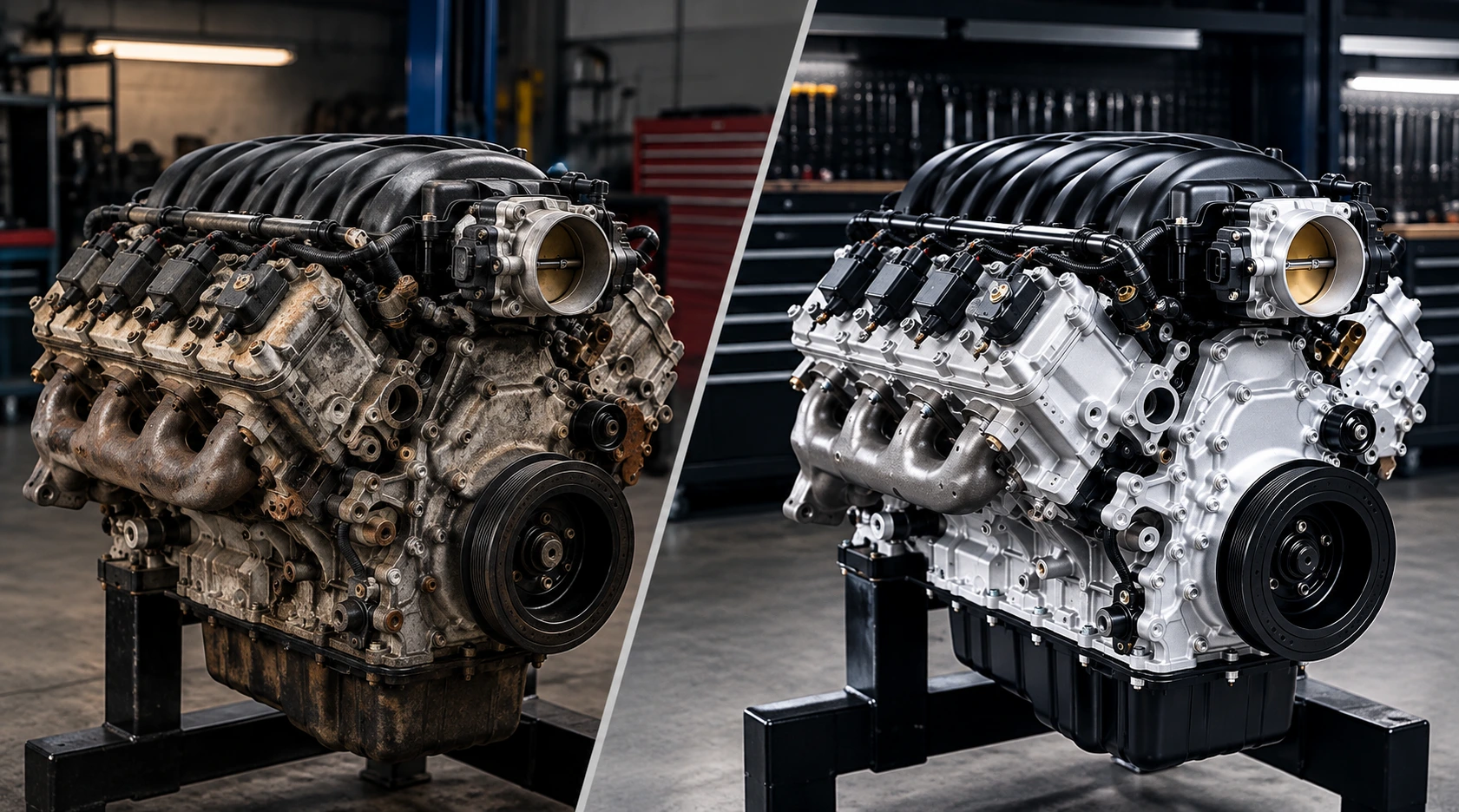
The biggest difference is how each engine is prepared and sold. A used engine is
generally removed from another vehicle and offered based on its existing condition,
while a remanufactured engine goes through a defined rebuilding and inspection
process. The exact procedures vary between suppliers and manufacturers.
Understanding the difference can help you compare your options more confidently,
especially when factors such as price, condition, specifications, fitment, warranty,
and long-term use are important.
What Is a Used Engine?
A used engine is an engine that has previously been installed and operated in
another vehicle. It is typically removed from a vehicle and then sold as a
replacement for another vehicle with a compatible application.
The condition of a used engine can vary considerably depending on its previous
mileage, maintenance history, operating conditions, storage, and the inspection
process performed by the seller.
Some used engines can be a practical replacement option, particularly when the
application is difficult to find or when the buyer is primarily focused on
upfront purchase price. However, buyers should carefully review the available
information about the engine’s condition and history.
What Is a Remanufactured Engine?
A remanufactured engine is a previously used engine that has undergone a
rebuilding and inspection process designed to restore it to specified standards.
Rather than simply reselling the engine in its existing condition, the engine is
disassembled and its major components are evaluated.
Depending on the remanufacturer and engine application, the process may include
cleaning, inspection, machining, replacement of worn components, assembly, and
final testing.
The exact process is important because not every remanufactured engine is prepared
in exactly the same way. When comparing products, review the supplier’s stated
remanufacturing process, specifications, warranty, and included components.
Remanufactured vs Used Engines: The Main Differences
The easiest way to understand remanufactured vs used engines is
to compare how they are sourced, inspected, prepared, and supplied.
| Factor |
Used Engine |
Remanufactured Engine |
| Previous use |
Previously installed and operated |
Previously used core that is rebuilt |
| Inspection |
Varies by supplier |
Part of the remanufacturing process |
| Disassembly |
Usually not fully disassembled for resale |
Major components are typically disassembled and evaluated |
| Machining |
Generally limited to preparation or repair as needed |
May include machining to specified tolerances |
| Worn components |
May remain depending on condition |
Unsuitable or worn components may be replaced |
| Condition consistency |
Can vary significantly |
Depends on the remanufacturer’s standards and process |
| Price |
Often lower upfront |
Often higher than a comparable used engine |
| Documentation |
Depends on supplier |
Depends on remanufacturer and product |
1. Engine Condition
Engine condition is one of the most important differences between the two options.
A used engine’s condition is influenced by how it was operated before removal.
Two engines of the same type and model year can have very different histories.
One may have been properly maintained, while another may have experienced severe
operating conditions or neglected maintenance.
A remanufactured engine is processed with the objective of restoring its components
according to the remanufacturer’s specifications. Components are inspected and,
where required, repaired, machined, or replaced as part of that process.
This does not mean every remanufactured engine is identical. The quality of the
final product depends on the remanufacturer’s procedures, parts, machining,
assembly standards, and testing.
2. Inspection and Testing
Inspection is another major consideration when comparing a used engine with a
remanufactured engine.
Used engines may undergo different levels of inspection depending on the seller.
Some suppliers perform basic checks, while others may provide more detailed
testing information.
With a remanufactured engine, inspection and testing are normally part of the
rebuilding process. The engine is evaluated during disassembly, components are
checked, and the completed assembly may be tested according to the
remanufacturer’s procedures.
When purchasing, ask what inspections and tests were actually performed rather
than assuming that every remanufactured engine follows the same process.
3. Replacement of Worn Components
A used engine is generally sold based on its existing condition. Components that
have already accumulated wear may remain in the engine.
During remanufacturing, components are evaluated and parts that do not meet the
required specifications may be replaced or reconditioned.
This is one reason why the remanufacturing process can provide a more controlled
starting point than purchasing an engine solely based on its previous vehicle
history.
4. Machining and Reconditioning
A remanufactured engine may undergo machining and reconditioning of major
components as required by the remanufacturer’s specifications.
Depending on the engine, this can involve work on components such as the cylinder
block, crankshaft, cylinder heads, or other critical areas.
Used engines generally do not receive the same complete rebuilding process simply
because they are being sold as used replacement engines.
If you are comparing two engines, don’t just look at the words “used” or
“remanufactured.” Look at the actual process behind the product.
5. Upfront Cost
Price is naturally one of the biggest reasons buyers consider a used engine.
A used engine can have a lower initial purchase price, although pricing varies
considerably by engine type, availability, mileage, demand, and supplier.
A remanufactured engine can cost more because resources have been invested in
disassembly, inspection, machining, replacement components, assembly, and testing.
However, comparing only the purchase price does not provide the complete picture.
Buyers should also consider installation costs, included components, warranty
coverage, shipping, return policies, and the condition of the engine.
6. Warranty and Supplier Terms
Warranty coverage can make a significant difference when choosing an engine
replacement.
Warranty terms vary between suppliers, engine types, and products. Some used
engines may have limited coverage, while certain remanufactured engines may come
with more extensive warranty terms.
Never assume that a particular warranty applies simply because an engine is
described as remanufactured.
Before ordering, carefully review:
- Warranty duration
- What components are covered
- Labor coverage, if any
- Warranty exclusions
- Installation requirements
- Return requirements
- Core requirements
- Shipping responsibilities
These details should be considered alongside the engine’s price and specifications.
7. Fitment Still Matters
Whether you choose a used or remanufactured engine, correct fitment is essential.
The engine must be appropriate for your vehicle’s specific application.
Do not assume that two engines are interchangeable simply because they have the
same displacement.
Before ordering, verify:
- Vehicle year
- Make and model
- Engine displacement
- Engine code
- VIN information where applicable
- 2WD, 4WD, or AWD configuration
- Fuel configuration
- Engine family
- Required accessories and components
- Product-specific fitment information
For a more detailed explanation of the selection process, read our guide:
How to Choose the Right Replacement Engine for Your Vehicle
.
8. What About Engine Mileage?
Mileage is particularly relevant when considering a used engine. A lower-mileage
engine may appear attractive, but mileage alone does not tell you everything about
an engine’s condition.
Maintenance history, operating conditions, storage, previous repairs, and the
engine’s actual condition can all matter.
For a remanufactured engine, the condition and preparation of the engine after
rebuilding become more important than simply looking at the mileage of the
original core.
This is another reason why buyers should evaluate the complete product description
and remanufacturing process instead of relying on a single specification.
9. Long Block vs. Complete Engine
Another important consideration is what you are actually buying. The term
“replacement engine” can refer to different configurations.
A long block generally includes the main internal engine assembly,
block, cylinder heads, and related components. External accessories may need to
be transferred from the original engine.
A more complete engine assembly may include additional components depending on
the specific product.
Always check the product description carefully. Knowing what is included can help
you compare the actual cost of two replacement engines accurately.
10. Which Is Better: Used or Remanufactured?
There is no single answer that applies to every vehicle or buyer.
A used engine may make sense when upfront cost, availability, or a specific
replacement application is the primary consideration.
A remanufactured engine may be attractive when the buyer wants an engine that has
gone through a defined rebuilding and inspection process rather than purchasing
an engine solely based on its previous use.
The right choice depends on the specific engine, supplier, warranty, fitment,
price, intended use, and the level of inspection and rebuilding involved.
When a Used Engine May Make Sense
- You need a lower upfront-cost replacement option.
- A suitable used engine is readily available.
- The engine’s history and condition can be verified.
- The supplier provides appropriate fitment information.
- The available warranty and return terms meet your requirements.
When a Remanufactured Engine May Make Sense
- You want an engine that has undergone a rebuilding process.
- You prefer components to be inspected as part of the remanufacturing process.
- You want a more controlled specification than an unknown used engine may provide.
- The available warranty and supplier terms are suitable for your project.
- The remanufactured engine is properly matched to your vehicle.
How to Compare Two Engine Options
If you are comparing a used engine with a remanufactured engine, don’t make the
decision based on price alone. Use the following checklist:
-
Confirm compatibility.
Make sure both engines are actually suitable for your vehicle.
-
Compare engine codes.
Confirm that the engine configuration matches your application.
-
Review the engine condition.
Understand what is known about the used engine and what was done during
remanufacturing.
-
Check included components.
Make sure you are comparing equivalent engine configurations.
-
Compare warranty terms.
Read the actual warranty instead of assuming coverage.
-
Consider total cost.
Include shipping, installation, required components, and potential additional
work.
-
Check the supplier.
Look for clear specifications, fitment information, support, and transparent
product terms.
Remanufactured vs Used Engines: Quick Decision Guide
| If Your Priority Is… |
Consider |
| Lower upfront purchase price |
Used engine |
| A defined rebuilding process |
Remanufactured engine |
| Known fitment |
Either, provided specifications are verified |
| Inspection and component evaluation |
Remanufactured engine |
| Specific low-mileage application |
Used engine may be worth considering |
| Rebuilt engine with documented specifications |
Remanufactured engine |
Frequently Asked Questions
What is the difference between a used and remanufactured engine?
A used engine is generally removed from another vehicle and sold based on its
existing condition. A remanufactured engine is disassembled, inspected, and
rebuilt according to the remanufacturer’s process and specifications.
Are remanufactured engines better than used engines?
Not automatically. The quality depends on the specific engine, remanufacturer,
components, rebuilding process, testing, warranty, and fitment. A properly
remanufactured engine can offer a more controlled rebuilding process than a
typical used engine, but buyers should evaluate the actual product and supplier.
Are used engines cheaper than remanufactured engines?
Used engines are often less expensive upfront, although prices vary according
to engine type, mileage, availability, condition, and supplier. A remanufactured
engine may cost more because it has undergone additional inspection, machining,
rebuilding, and testing.
How long does a remanufactured engine last?
There is no single lifespan that applies to every remanufactured engine. Longevity
depends on the quality of the remanufacturing process, components used, installation,
maintenance, vehicle application, and driving conditions.
Should I buy a used engine with low mileage?
Low mileage can be useful information, but it should not be the only factor.
Maintenance history, condition, previous use, inspection results, fitment, and
warranty terms should also be considered.
What should I check before buying a remanufactured engine?
Check the engine code, vehicle fitment, specifications, rebuilding process,
included components, warranty, core requirements, shipping terms, and return
policy. Confirm compatibility before placing the order.
Choose the Right Engine for Your Vehicle
The choice between a used and remanufactured engine ultimately comes down to
your vehicle, budget, application, and expectations. A used engine can provide
a practical replacement when the condition and fitment are suitable, while a
remanufactured engine provides a rebuilding process intended to restore the
engine to defined specifications.
Whatever option you choose, the most important step is to verify compatibility
before ordering. Engine displacement alone is not enough. Always compare the
vehicle year, make, model, engine code, drivetrain, specifications, and included
components.
At Mechron Tech, we provide powertrain solutions including replacement engines
and LS engine applications. Explore our engine range and review the available
specifications and fitment information before making your decision.
Looking for a Replacement Engine?
Browse Mechron Tech’s engine range and find replacement engine options based
on specifications and vehicle application.
Explore Replacement Engines