Engine Replacement Guide
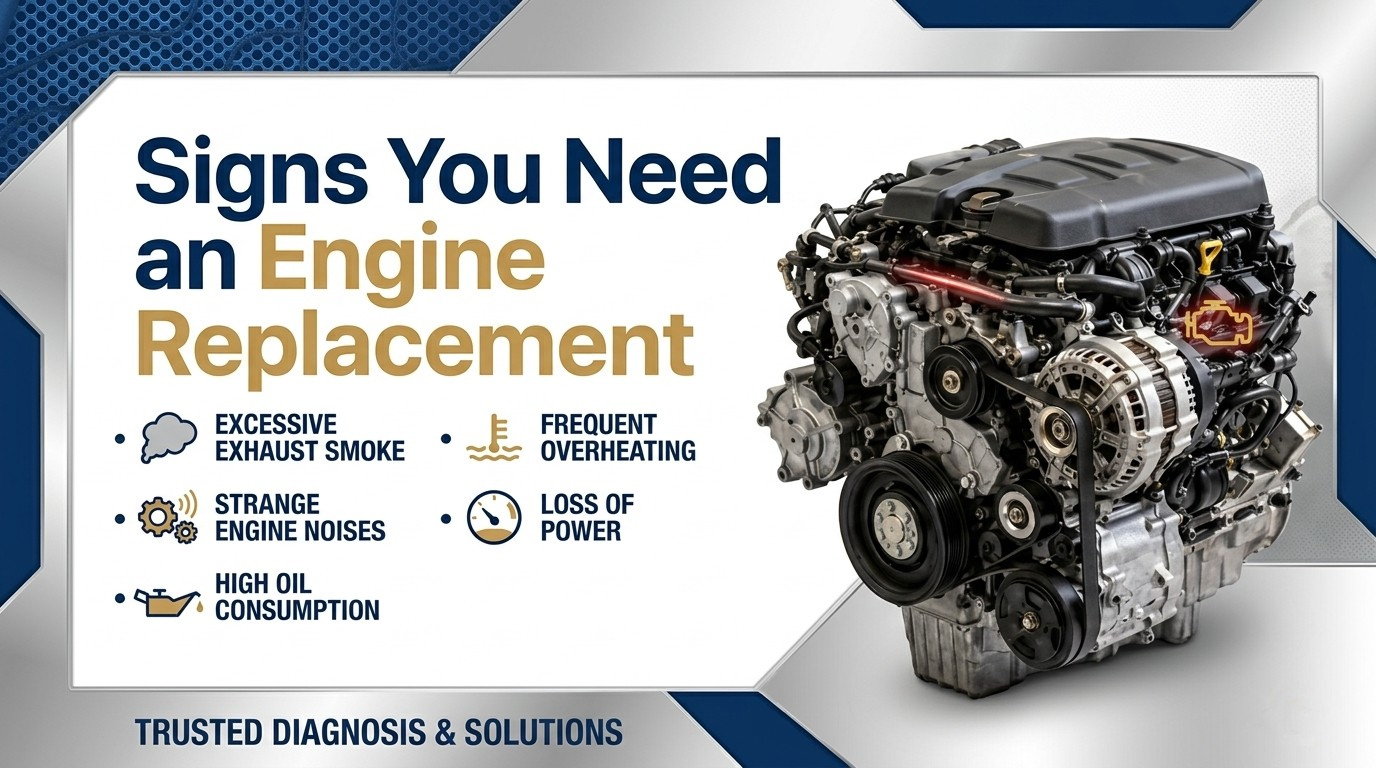
Signs You Need an Engine Replacement
Engine problems do not always mean you need a replacement. However, certain
symptoms can indicate serious internal damage that may make replacing the
engine a more practical solution than continuing to repair it. Learn the
warning signs, what they can mean, and what to check before choosing a
replacement engine.
Your vehicle’s engine is one of its most important components, and major engine
failure can quickly turn a routine repair into a significant decision. Strange
noises, excessive smoke, overheating, loss of power, or increasing oil
consumption can all point to an underlying engine problem.
But identifying a serious symptom is only the beginning. Some engine problems
can be repaired without replacing the complete engine, while severe internal
damage may make an engine replacement worth considering.
A professional diagnosis is therefore important before making a final decision.
In this guide, we cover the most common signs you need an engine
replacement, what each symptom can indicate, and the information you
should verify when shopping for a replacement engine.
!
Important: A symptom is not automatically a diagnosis
Many engine symptoms can have multiple causes. A knocking sound, for
example, may indicate serious internal damage, but other problems can
produce similar noises. Have the vehicle properly diagnosed before
deciding that the complete engine needs to be replaced.
10 Warning Signs
Key symptoms that deserve professional attention.
Diagnose First
Symptoms alone cannot confirm engine failure.
Verify Fitment
Match the replacement to your exact application.
10 Signs You May Need an Engine Replacement
The following symptoms can indicate serious engine problems. Seeing one of
these signs does not automatically mean the engine must be replaced, but
several symptoms occurring together can justify a detailed inspection.
01
⚙
Persistent Engine Knocking
A deep knocking or pounding noise from inside the engine can indicate
problems involving internal components such as bearings or other
rotating parts. The sound may become more noticeable under load or
as engine speed changes.
Because several mechanical problems can create unusual engine noises,
professional diagnosis is important before deciding on an engine
replacement.
Serious symptom
02
♨
Repeated Overheating
An engine that repeatedly overheats can suffer serious damage if the
underlying problem is not corrected. Cooling-system failures,
thermostat problems, radiator issues, coolant leaks, head-gasket
problems, and other faults can contribute to overheating.
Severe overheating can potentially damage internal engine components,
making further inspection necessary.
High priority
03
☁
Persistent Excessive Smoke
Unusual exhaust smoke can indicate an engine problem, although the
meaning depends on the smoke’s color, amount, frequency, and operating
conditions.
Persistent blue, white, or unusually heavy smoke can justify further
investigation for issues involving oil consumption, coolant entry,
combustion, or other engine components.
Investigate
04
▾
Severe Loss of Engine Power
A noticeable and persistent loss of power can have many causes,
including fuel, ignition, air intake, exhaust, sensor, transmission,
or engine problems.
When loss of power is accompanied by poor compression, unusual noises,
smoke, or other serious symptoms, internal engine damage should be
investigated.
Investigate
05
◉
Very Low Compression
Compression testing can provide valuable information about the
condition of an engine’s cylinders. Very low compression can be
associated with problems involving valves, piston rings, cylinder
walls, head gaskets, or other internal components.
If multiple cylinders show serious compression problems, the cost and
practicality of rebuilding the existing engine may need to be compared
with an engine replacement.
Serious symptom
06
◒
Excessive Oil Consumption
Some engines naturally consume a small amount of oil, but a sudden or
excessive increase can indicate an underlying mechanical problem.
Worn piston rings, cylinder wear, valve-related problems, leaks, or
other issues can contribute to oil consumption. The source should be
identified before deciding whether the engine needs replacement.
Investigate
07
+
Metal in the Engine Oil
Metallic particles or excessive debris found during an oil change can
be a warning sign of internal component wear or damage.
The source and amount of the material should be professionally
evaluated. Significant internal wear can sometimes indicate that
continued operation could lead to further damage.
Serious symptom
08
◈
Coolant Contamination or Internal Leaks
Coolant and engine oil are designed to remain in separate systems.
Evidence that coolant is entering the engine oil, or that combustion
gases are entering the cooling system, can indicate a serious fault.
A head-gasket failure may sometimes be repairable without replacing
the complete engine, but severe damage from overheating or other
failures can change the repair decision.
High priority
09
⚠
Repeated Major Engine Failures
If an engine has experienced multiple major mechanical failures,
repeatedly repairing individual components may eventually become less
practical than replacing the complete assembly.
The decision should take into account the engine’s overall condition,
repair history, vehicle value, labor costs, and availability of a
suitable replacement engine.
Evaluate options
10
↗
Repair Costs Are Becoming Excessive
Sometimes the strongest reason to consider an engine replacement is
economic rather than mechanical. If the existing engine requires
extensive internal repairs, machining, and multiple replacement
components, compare the total repair cost with suitable replacement
engine options.
The comparison should include labor, parts, downtime, warranty,
shipping, and the condition of the replacement engine.
Compare options
Not Every Engine Symptom Means You Need a New Engine
One of the most important things to understand about engine replacement
is that symptoms can overlap. A vehicle that is losing power, overheating,
smoking, or making unusual noises may have a problem that can be repaired
without replacing the entire engine.
Problems That May Be Repairable
- Cooling-system component failure
- External oil or coolant leaks
- Ignition component problems
- Fuel-system issues
- Sensor or electronic faults
- Accessory or belt-related problems
- Some gasket failures
- Other isolated component failures
Problems That May Require Major Engine Work
- Severe internal bearing damage
- Major piston or cylinder damage
- Severely damaged crankshaft
- Cracked engine block
- Severe overheating-related damage
- Extensive internal wear
- Multiple major internal failures
- Damage where repair is no longer practical
Before You Order
Get the Problem Diagnosed First
Replacing an engine is a major repair decision. Before purchasing a
replacement, have the vehicle evaluated and determine what actually caused
the failure.
Depending on the symptoms, a professional may use compression testing,
leak-down testing, diagnostic scanning, oil inspection, cooling-system
testing, visual inspection, or other diagnostic procedures.
The objective is to determine whether the problem is internal engine
damage, an external component, an electrical issue, the cooling system,
fuel system, transmission, or another part of the vehicle.
What to Check Before Buying a Replacement Engine
If diagnosis confirms that replacement is the practical option, the next step
is finding an engine that actually matches your vehicle. Do not choose an
engine based only on displacement or vehicle model.
- Vehicle year
- Vehicle make and model
- Engine displacement
- Engine code
- VIN information
- 2WD, 4WD, or AWD configuration
- Fuel system configuration
- Engine family
- Relevant casting numbers
- Required engine configuration
- Included components
- Warranty and return terms
Why Engine Fitment Matters
Finding a replacement engine with the correct displacement is only the
beginning. The engine must also be compatible with the vehicle’s specific
configuration.
For example, several vehicles may use a 5.3L V8 while having different engine
codes, model-year applications, drivetrain configurations, fuel systems, or
supporting components.
This is why Mechron Tech product listings provide engine specifications and
vehicle application information. Always compare the product’s fitment with
your vehicle before ordering.
If you are still determining which engine is right for your vehicle, read our
guide:
How to Choose the Right Replacement Engine for Your Vehicle
.
Should You Consider a Remanufactured Engine?
When an engine needs to be replaced, buyers commonly compare used and
remanufactured engines.
A used engine is generally sold based on its existing condition and previous
use. A remanufactured engine goes through a rebuilding process in which
components are inspected and, depending on the remanufacturer’s procedures,
machined, reconditioned, or replaced.
The right option depends on the specific application, price, condition,
warranty, supplier, and intended use.
For a detailed comparison, read:
Remanufactured vs Used Engines: What’s the Difference?
.
What Happens During Engine Remanufacturing?
The exact process varies between manufacturers, but a professional
remanufacturing process generally involves multiple stages rather than simply
cleaning and reselling a used engine.
01
Disassembly & Initial Inspection
The engine is disassembled and major components are inspected for
wear, damage, and condition.
02
Cleaning
Components are cleaned to remove accumulated deposits, contaminants,
and other material before detailed inspection.
03
Inspection & Measurement
Critical components are evaluated against the applicable
specifications to determine whether they can be reused,
reconditioned, or replaced.
04
Machining & Component Replacement
Depending on the engine and remanufacturer, machining and
replacement of worn or unsuitable components may be performed.
05
Assembly & Final Testing
The engine is assembled according to the applicable process and
may undergo final inspection or testing before being offered as a
replacement engine.
Engine Replacement vs. Engine Repair
Once a major engine problem has been identified, you may need to compare
rebuilding or repairing your current engine with purchasing a replacement
engine.
| Consideration |
Repair / Rebuild Existing Engine |
Replacement Engine |
| Existing engine |
Kept and repaired |
Replaced with another compatible engine |
| Parts required |
Depends on damage |
Depends on replacement configuration |
| Machine work |
May be required |
Depends on engine type and remanufacturer |
| Labor |
Can vary significantly |
Installation is still required |
| Downtime |
Depends on repair scope |
Depends on engine availability and installation |
| Decision factors |
Damage, parts, machining, labor and engine condition |
Fitment, condition, specifications, price and warranty |
Questions to Ask Before Ordering an Engine
Before purchasing any replacement engine, make sure you understand exactly
what you are receiving and whether it matches your vehicle.
Fitment Questions
- Does this engine fit my exact year and model?
- Does the engine code match my application?
- Is it compatible with my drivetrain?
- Are there multiple engine configurations for my vehicle?
- Does the VIN affect compatibility?
Product Questions
- Is the engine used or remanufactured?
- What components are included?
- What inspection or rebuilding process was performed?
- What warranty applies?
- Are there core, shipping, or return requirements?
When Does Engine Replacement Make Sense?
An engine replacement may become a practical option when the
existing engine has extensive internal damage, multiple major failures, severe
overheating damage, or repair requirements that make rebuilding the existing
engine less practical.
The decision should be based on the complete situation rather than a single
symptom. Consider the engine’s condition, the vehicle’s value, repair costs,
labor, replacement engine availability, warranty terms, and your long-term
plans for the vehicle.
Most importantly, confirm the diagnosis before ordering. Once replacement is
appropriate, spend equal attention on choosing the correct engine and verifying
fitment.
Frequently Asked Questions
What are the most common signs you need an engine replacement?
Serious warning signs can include persistent engine knocking, severe
loss of compression, repeated overheating, excessive oil consumption,
metal in the engine oil, major internal damage, persistent excessive
smoke, and multiple significant engine failures. These symptoms require
proper diagnosis before replacement is recommended.
How do I know if my engine needs to be replaced or repaired?
A professional diagnosis is the best starting point. The decision
depends on the type and extent of damage, repair cost, engine condition,
availability of parts, labor requirements, and the availability and
price of a suitable replacement engine.
Does engine knocking always mean I need a new engine?
No. Engine knocking can have different causes and does not automatically
confirm that the complete engine needs replacement. The source and
severity of the noise should be professionally diagnosed.
Can overheating damage an engine?
Severe or repeated overheating can cause significant engine damage.
However, the underlying cause should be identified first because some
cooling-system problems can be repaired without replacing the engine.
Is excessive oil consumption a sign of engine failure?
Excessive oil consumption can indicate an engine problem, but it can
have several possible causes. A proper inspection is needed to determine
whether the issue is internal engine wear, a leak, or another component.
What should I check before buying a replacement engine?
Verify your vehicle year, make, model, engine size, engine code, VIN
information, drivetrain, fuel configuration, fitment, specifications,
included components, warranty, shipping, and return terms.
Is a remanufactured engine a good replacement option?
A remanufactured engine can be an option when you need a replacement
engine that has gone through a defined rebuilding and inspection process.
Compare the specific remanufacturer, specifications, fitment, warranty,
included components, and price before purchasing.
Find Your Engine
Ready to Find the Right Replacement Engine?
If your vehicle has been diagnosed with major engine damage, start by
identifying the exact engine configuration and verifying fitment. Browse
the Mechron Tech engine range to explore available replacement and
remanufactured engine options.
Explore Replacement Engines →
Important: Engine symptoms can have multiple causes. The
information in this article is provided for general educational purposes and
should not replace professional vehicle diagnosis or repair advice.